Military working dogs are among the most disciplined, intelligent, and courageous animals in service. Before they can protect personnel, detect dangerous substances, or assist in security operations, these remarkable dogs must complete an intensive military dog training program.
The footage offers a fascinating look inside a military working dog boot camp, where trainers prepare selected dogs for demanding assignments. Their journey includes basic obedience, scent detection, agility exercises, controlled patrol work, and the development of a strong partnership with a handler.
The process requires patience, consistency, and trust. Not every dog is suited for this work, and those selected must demonstrate confidence, motivation, physical fitness, and the ability to remain focused in challenging environments.
Selecting Dogs for Military Service
Training begins with identifying dogs that have the right qualities for military and security work.
Trainers look for animals that are energetic, curious, confident, and eager to work for a reward. A successful military working dog must be comfortable around people, unfamiliar objects, loud sounds, vehicles, and changing environments.
Breeds commonly associated with working-dog programs include German Shepherds, Belgian Malinois, and Dutch Shepherds. However, a dog’s individual temperament and working ability are often more important than appearance alone.
Some dogs enter training when they are young, while others may begin after their physical and behavioral abilities have been evaluated. Each dog is closely observed to determine which type of work best suits its natural strengths.
Obedience Builds the Foundation
Before a dog can participate in advanced exercises, it must master basic obedience.
During this stage of military dog boot camp, trainers teach commands such as sit, stay, heel, down, and come. The dogs must learn to respond quickly, even when distractions are present.
Obedience is more than teaching a dog to follow instructions. It creates communication between the animal and the handler. In a real operation, hesitation or confusion could place both the dog and surrounding personnel at risk.
Handlers use repetition, rewards, and clear commands to reinforce the correct behavior. The goal is to develop a dog that is responsive without losing its confidence or natural enthusiasm.
Military Dogs Learn Scent Detection
One of the most impressive parts of military working dog training is scent detection.
In the footage, dogs search training areas containing boxes, containers, rooms, and hidden objects. Trainers encourage them to use their powerful sense of smell to locate a designated target odor.
At first, the exercises may be simple. The dog learns that finding the correct scent produces a reward, often a toy or an opportunity to play. As the dog improves, trainers make the search more difficult by hiding the scent in larger or more complex environments.
The dog must learn to ignore distracting smells and focus only on the odor it has been trained to recognize.
Depending on its specialization, a detection dog may be prepared to search for explosives, narcotics, weapons, or other materials. Detection dogs may work around buildings, vehicles, luggage, warehouses, checkpoints, and outdoor locations.
Patrol Training Requires Discipline and Control
Some military working dogs are trained for patrol and protection duties.
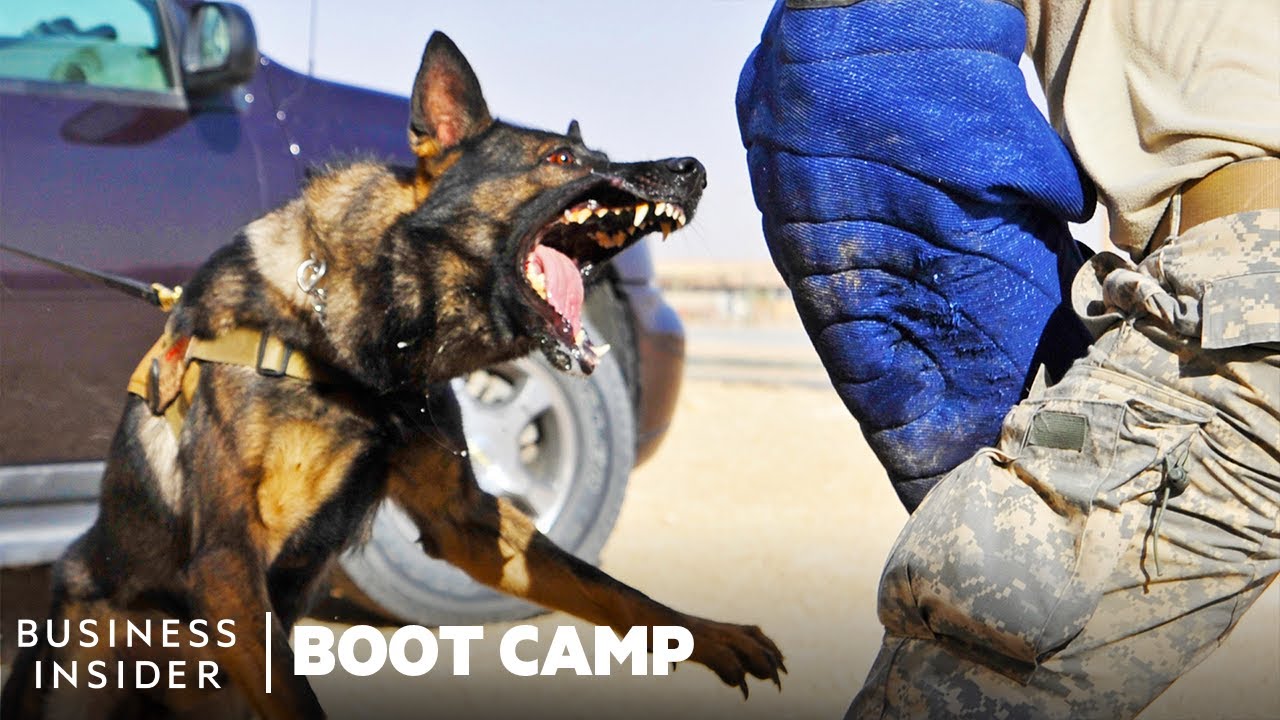
These exercises may include pursuing a simulated suspect, holding a person in place, or responding when a handler faces a possible threat. Trainers wearing protective equipment allow the dogs to practice controlled apprehension safely.
Although the scenes can appear intense, control is the most important part of patrol dog training. The dog must respond when commanded and release immediately when instructed by the handler.
A patrol dog cannot simply act aggressively. It must learn when action is appropriate and when it is not. This level of discipline takes extensive practice and close supervision.
The objective is to produce a reliable working dog that can remain under control during stressful and rapidly changing situations.
Agility Training Builds Confidence
Military dogs may encounter obstacles during searches and field operations. For this reason, physical conditioning and agility are important parts of their preparation.
The dogs may be asked to climb ramps, cross narrow surfaces, jump over barriers, move through tunnels, or search unfamiliar structures. Each exercise helps strengthen the dog’s balance, coordination, confidence, and ability to follow directions.
A dog that is initially uncertain about an obstacle is introduced to it gradually. The trainer offers encouragement and rewards until the dog becomes comfortable completing the task.
Agility exercises also teach dogs to trust their handlers. When a handler directs a dog over an unfamiliar obstacle, the animal must believe that it is safe to continue.
Dogs and Handlers Train as a Team
A military dog’s skills are only one part of the equation. The relationship between the dog and its handler is equally important.
Handlers must learn how their dogs communicate through body posture, movement, breathing, and changes in behavior. During scent detection, for example, a small change in the dog’s actions may indicate that it has located a target.
The handler is responsible for caring for the dog, maintaining its training, monitoring its health, and keeping it prepared for duty.
Training together creates a deep bond. Over time, the dog learns to rely on the handler for guidance, while the handler learns to recognize the dog’s strengths, limits, and signals.
This partnership can become essential during real missions, where both members of the team depend on each other.
Positive Rewards Keep the Dogs Motivated
A major part of working-dog training involves rewards.
For many military dogs, the opportunity to chase a ball, bite a toy, or play with a handler is highly motivating. Trainers connect this reward with successful performance.
When the dog identifies the correct scent, completes an obstacle, or responds properly to a command, it receives something it values. This encourages the dog to repeat the behavior during future training sessions.
The reward may look like ordinary play, but it is an important training tool. It keeps the dog enthusiastic while building a clear connection between effort and success.
Veterinary Care Supports Every Working Dog
Military working dogs require regular medical attention to remain healthy and ready for service.
Veterinary professionals monitor their weight, teeth, joints, paws, and overall physical condition. Puppies and younger dogs also receive care as they grow and develop.
Working dogs can experience physical strain because of running, jumping, searching, and repeated training. Early medical attention can help identify injuries or health concerns before they become more serious.
Proper nutrition, exercise, rest, grooming, and routine examinations are all essential parts of responsible military dog care.
What Happens After Boot Camp?
After completing the required training, qualified dogs may be paired with handlers and assigned to military installations, security units, or specialized teams.
Their duties may include:
- Detecting explosives or prohibited materials
- Searching buildings and vehicles
- Supporting military security patrols
- Protecting personnel and facilities
- Tracking individuals
- Assisting during special operations
- Supporting law-enforcement missions
- Helping locate people during emergencies
Training does not stop after graduation. Military working dogs and their handlers must practice regularly to maintain their skills and prepare for new situations.
Not Every Dog Completes the Program
Military dog boot camp is demanding, and not every dog completes the full training process.
A dog may struggle with a particular task, lack the necessary confidence, or prove better suited to another type of work. Trainers carefully evaluate each animal rather than forcing it into a role that does not match its abilities.
Dogs that do not qualify for operational service may be transferred to another program or considered for adoption, depending on their circumstances and behavior.
The welfare of the dog remains an important consideration throughout the evaluation process.
Honoring the Dedication of Military Working Dogs
Military working dogs perform difficult jobs that require intelligence, courage, discipline, and exceptional physical ability.
Behind every successful working dog are months of training, professional care, and patient instruction. From early obedience lessons to advanced detection and patrol exercises, each stage prepares the dog to perform safely and effectively.
The footage from inside military dog boot camp reveals that these animals are not born ready for duty. Their skills are developed through structured training and a powerful relationship with their handlers.
Whether searching for a hidden scent, crossing a difficult obstacle, or protecting personnel, military working dogs demonstrate why they are respected as valuable members of their teams.
Their service is built on more than instinct. It is built on training, trust, teamwork, and an extraordinary willingness to work beside the humans who depend on them.