Police K-9s are respected around the world for their courage, intelligence, loyalty, and extraordinary working abilities. They help officers search dangerous locations, track suspects, locate missing people, detect illegal substances, and protect communities.
However, behind every serious assignment is a dog with a unique personality.
A remarkable compilation of police K-9 dogs in action captures everything from tense law-enforcement operations and disciplined training exercises to hilarious mistakes, playful distractions, and affectionate moments with handlers.
The footage reveals the complete life of a working police dog. One moment, a K-9 may be standing alert beside a patrol vehicle. The next, it may be rolling in the snow, refusing to release a toy, or asking its handler for attention.
These scenes remind viewers that police dogs are not machines. They are dedicated working animals, trusted partners, and beloved members of their handlers’ families.
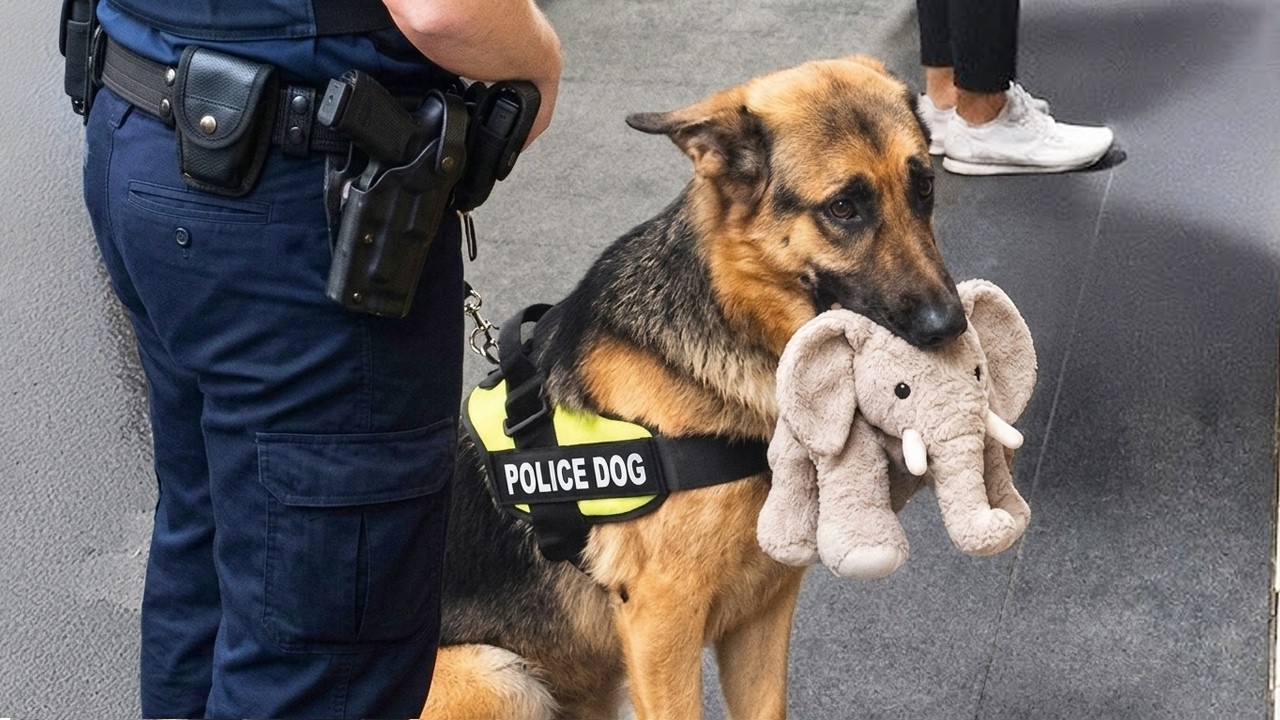
Police K-9s Respond During Dangerous Situations
Some of the most dramatic scenes show police dogs supporting officers during active law-enforcement situations.
K-9 teams may be called when officers need assistance locating a person, searching a vehicle, checking a building, or controlling a dangerous situation. Their powerful sense of smell, physical speed, and ability to follow commands make them valuable partners.
Before a police dog is deployed, the handler must evaluate the environment and determine whether the K-9 can safely and effectively assist.
The dog relies on its handler for instructions while the handler watches the animal’s body language and behavior. This teamwork is essential because conditions can change quickly during an operation.
A well-trained police K-9 must remain focused despite flashing lights, loud voices, moving vehicles, crowds, and unfamiliar surroundings.
K-9 Roxy Demonstrates Focus and Discipline
One sequence in the video features a police dog identified on screen as K-9 Roxy working near a marked patrol vehicle.
The dog remains close to the handler while responding to activity around the scene. This type of controlled behavior is developed through extensive obedience training and repeated exposure to realistic environments.
Police dogs must learn how to move around patrol cars, remain calm near officers, and respond immediately when their handlers give commands.
Even when a K-9 appears excited, the handler must maintain communication and control. Successful police dog work depends not only on the dog’s natural ability but also on its willingness to listen during high-pressure moments.
Obedience Is the Foundation of Police Dog Training
Before learning advanced skills, every police K-9 must develop reliable obedience.
Basic commands may include:
- Sit
- Stay
- Down
- Heel
- Come
- Search
- Release
- Return to the handler
These commands may appear simple, but a working dog must perform them in environments filled with distractions.
A family pet may sit calmly inside a quiet home. A police K-9 may need to follow the same command beside a busy roadway, near a crowd, or while another person is moving nearby.
Handlers practice obedience regularly so that the dog’s responses become consistent. Repetition also strengthens communication between the two partners.
Police Dogs Train Around Crowds and Public Events
Several clips show police dogs interacting with officers and members of the public.
Public demonstrations help communities understand how K-9 units operate. They may also give dogs valuable experience working around crowds, children, cameras, unusual noises, and unfamiliar movements.
During these events, handlers often demonstrate obedience, agility, scent detection, or controlled apprehension skills.
Police dogs must learn that not every person is a threat. They need to remain calm and neutral until the handler gives a clear instruction.
This ability to distinguish between ordinary public interaction and an operational situation is an important part of responsible K-9 training.
Different Breeds Can Serve in Specialized Roles
German Shepherds and Belgian Malinois are among the breeds most commonly associated with police K-9 units. Both are known for intelligence, athleticism, confidence, and strong working motivation.
However, the compilation also shows dogs of different sizes and appearances.
Not every police dog performs the same job. Some dogs specialize in patrol and tracking, while others are trained for scent-detection duties.
Smaller dogs may be particularly useful when searching luggage, transportation areas, offices, or confined spaces. Their friendly appearance can also make them suitable for working in crowded public environments.
A dog’s temperament, motivation, health, and scenting ability are often more important than its size.
Scent Detection Uses a Dog’s Natural Ability
A dog’s sense of smell is far more sensitive than a human’s. Police departments can develop this natural ability through specialized scent-detection training.
Detection dogs may be trained to identify specific odors connected to explosives, narcotics, evidence, currency, or other materials.
During training, an odor is hidden inside a container, room, vehicle, or piece of luggage. The dog searches until it identifies the correct location.
When the target odor is found, the K-9 may sit, freeze, stare, scratch, or use another trained response to alert the handler.
The dog is then rewarded with praise, play, or a favorite toy. This reward helps the dog understand that locating the odor leads to something positive.
Although the search appears serious to viewers, many detection dogs experience it as an exciting game.
A Strong Bond Connects Every K-9 and Handler
The most important relationship in a K-9 unit is the bond between the police dog and its handler.
Handlers do much more than issue commands. They are responsible for the dog’s training, feeding, exercise, grooming, transportation, safety, and medical care.
Many police K-9s live at home with their handlers. Away from work, they may relax, play with toys, interact with family members, and behave like ordinary pets.
Living and training together helps the handler understand the dog’s personality. Small changes in posture, breathing, ear position, or movement may communicate excitement, stress, uncertainty, or the discovery of a scent.
The dog also learns to trust the handler’s decisions. During a difficult search or unfamiliar situation, that trust can become essential.
Funny Police Dog Moments Reveal Their Personalities
Not every scene in the compilation is serious.
Several clips show K-9s becoming distracted, ignoring the expected routine, or creating hilarious situations for their handlers.
Even highly trained police dogs can become excited by toys, food, snow, other animals, or an unexpected opportunity to play.
A K-9 may know dozens of commands and still decide that rolling on the ground is more interesting than looking professional. Another may become so excited to work that it jumps, spins, or pulls eagerly toward the next activity.
These funny police dog moments are relatable because they remind viewers of their own pets.
Training can shape a dog’s behavior, but it does not remove its personality.
Snow Turns a Working Dog Into a Playful Puppy
One memorable scene shows a police dog running and playing in deep snow.
The K-9 appears to forget its serious working image as it moves energetically through the frozen landscape. Like many dogs, it seems fascinated by the texture and movement of fresh snow.
Play is important for working dogs. It provides physical exercise, mental stimulation, and relief from demanding training routines.
Handlers can also use play to strengthen their relationship with the dog. A ball, tug toy, or game of chase may become both a reward and an opportunity to build trust.
Seeing a disciplined police dog behave like an excited puppy provides one of the compilation’s most joyful moments.
Police Dogs Sometimes Return to School
One humorous clip suggests that a dog needs to return to “K-9 school.”
The joke reflects a reality familiar to every dog handler: training is never truly finished.
Police dogs and handlers must practice throughout the animal’s working career. Regular exercises help maintain obedience, scent-detection accuracy, tracking ability, physical fitness, and controlled responses.
Without continued practice, skills can become less reliable.
Training sessions also allow handlers to identify weaknesses before they become problems during real operations.
Even experienced K-9s need refreshers, and even the best-trained dogs occasionally have an off day.
Puppies Begin Learning Through Positive Experiences
The footage includes younger dogs and smaller K-9 candidates being introduced to people, environments, and training activities.
A future police dog’s development may begin with socialization and confidence-building. Puppies can be exposed gradually to different surfaces, sounds, objects, vehicles, and locations.
The goal is not to frighten or overwhelm them. Trainers create positive experiences that encourage curiosity and confidence.
Young dogs also learn that interacting with a handler can lead to praise, food, or play.
These early lessons establish the foundation for more advanced training later in life.
Toys Are Powerful Training Rewards
Many police dogs have an intense desire to chase, bite, carry, or retrieve toys.
Handlers use this motivation during training. When the dog successfully completes a search or follows a command, it may be rewarded with a ball or tug toy.
To the K-9, receiving the toy may be the most exciting part of the entire exercise.
This positive reward system helps keep the dog enthusiastic and focused. It also makes demanding training sessions enjoyable.
A toy may look simple, but it can become one of the most effective tools used to train a working dog.
Police K-9s Must Stay Physically Fit
Police dog duties can involve running, climbing, jumping, searching, tracking, and working across uneven terrain.
Physical conditioning helps prepare K-9s for these challenges.
Training may include obstacle courses, controlled running, balancing exercises, climbing platforms, and moving through narrow spaces.
Handlers must also monitor the dog for signs of fatigue or injury. Paws, joints, teeth, muscles, and overall health require regular attention.
Veterinary care, proper nutrition, exercise, hydration, grooming, and rest are all necessary to support a police dog throughout its career.
Controlled Apprehension Requires Precision
Some police K-9s receive controlled apprehension training.
During these exercises, the dog may pursue and hold a trained decoy wearing protective equipment. Although the action can look aggressive, control is the most important part of the exercise.
The K-9 must engage only when directed and release immediately when commanded.
A dog that cannot be recalled or controlled is not ready for operational patrol work.
Handlers spend significant time practicing these commands because reliability protects the dog, the officers, and members of the public.
Working Dogs Are Also Beloved Companions
The affectionate scenes in the video show that police dogs are more than operational resources.
They lean against their handlers, seek attention, play with toys, and enjoy physical affection. These behaviors reveal the emotional relationship behind the uniform.
After spending years together, many handlers describe their K-9s as trusted partners and family members.
The dog may help protect the handler during duty, while the handler provides care, guidance, and companionship throughout the animal’s life.
That relationship often continues after the K-9 retires.
Retirement Gives K-9 Heroes Time to Relax
Police dogs eventually retire because of age, health, or changes in their working ability.
Many retired K-9s remain with their handlers and spend their later years living as family pets.
Retirement gives them more time to sleep, play, explore, and enjoy the home they already know.
Although they may no longer respond to daily calls, their years of service are not forgotten. Police departments and communities frequently honor retiring K-9s for their dedication.
These dogs may never understand awards or ceremonies, but they understand the love and attention they receive from the people around them.
Why Police K-9 Videos Become Viral
Police dog videos attract millions of viewers because they combine bravery, intelligence, humor, and emotion.
Audiences are amazed by the dogs’ ability to follow commands and perform complicated tasks. At the same time, they enjoy seeing these powerful K-9s act playful, affectionate, or unexpectedly silly.
The contrast makes each clip memorable.
A dog can appear fearless during an operation and then become completely distracted by a toy a few minutes later.
These moments allow the public to see police K-9s not only as working animals but also as individual dogs with emotions and recognizable personalities.
Honoring the Courage of Police K-9 Teams
Every police K-9 video represents countless hours of training and partnership.
The dogs depend on their handlers for direction, while handlers depend on their dogs’ senses, speed, intelligence, and loyalty.
Together, they can search places humans cannot reach easily, detect odors people cannot identify, and help officers during challenging situations.
The compilation celebrates every side of police K-9 life—from demanding operations and disciplined training to playful snow days and funny mistakes.
Police dogs may occasionally become distracted or forget to look serious, but their courage and commitment remain undeniable.
They are protectors, partners, companions, and four-legged heroes whose loyalty continues to inspire people around the world.